Carry-On Luggage: Size Rules and Smart Features
Airlines set different carry-on limits. Here is how to read the size rules, choose between hard and soft shells, and decide which features are worth paying for.
LagoonEP-921
We may earn a commission if you buy through links in this guide. How we make money
Four-wheel spinner carry-on, around 21 to 22 inches
It fits the size limits of most major airlines and rolls easily through terminals.
Most major US airlines allow a carry-on of about 22 by 14 by 9 inches, including wheels and handles. Many airlines abroad, and many budget airlines, are stricter. The only number that counts is the one on your airline's website for your fare, so check it before you buy and again before you fly.
That means the right bag is the one that fits the smallest limit you expect to face, and that has a few features you will use. Here is how to sort it out.
Read the size rules the right way
- Measure the whole bag. Wheels, handles and any outside pockets count. A bag listed as 22 inches may be longer once you include the wheels.
- Check weight too. Some airlines, especially outside the US, set a weight limit for carry-ons, and the number varies by carrier.
- Budget fares can be stricter. Some basic fares allow only a small personal item under the seat. Read the fare rules before you pack.
- Gate rules apply to full flights. Even a correctly sized bag may be tagged and checked when overhead bins run out.
If you fly several airlines, a bag around 21 inches is the safer pick.
Hard shell or soft shell?
| Type | Good for | Trade-offs |
|---|---|---|
| Hard shell (polycarbonate) | Protecting contents, wet weather, a clean look | No give when packing, scuffs show, cannot expand much |
| Soft shell (nylon or polyester) | Squeezing into tight bins, outside pockets | Less protection for fragile items, fabric can stain |
| Hybrid | A mix of both | Usually costs more |
If you tend to overpack, soft shells forgive you. If you carry breakables, a hard shell is better.
Features that matter
Wheels
Four spinner wheels glide next to you and turn in tight aisles. Two inline wheels roll better over rough pavement and cobblestones, and they take up less room inside the bag. Pick based on where you walk most.
Handle
A telescoping handle should lock firmly and feel solid when you lean on it. Wobble in the store means more wobble on the road.
Zippers and frame
Look for large, smooth zippers. Check how the zipper opens and closes in the store, because this is the part that fails first on many bags.
Compression and packing layout
Internal straps or a zip divider help keep clothes flat. If you are working on how to pack, our guide to packing cubes and fitting a week in a carry-on pairs well with this one.
Smart features
- Removable battery or USB port. Some bags have a slot for your own power bank. Note that airlines have rules about lithium batteries, and a removable battery is needed so staff can take it out if asked. Check your airline's policy.
- Built-in trackers. You can get the same result with a small tag from a well-known maker, and tags are easier to replace.
- Built-in scales. Handy if your airline weighs bags, but not essential.
- Laptop sleeve or front pocket. Quick access in the security line is nicer than it sounds.
Skip anything that adds weight without solving a problem you have.
Some well-known lines to compare
- Samsonite carry-ons, from budget to premium.
- Travelpro, popular with frequent flyers and crew.
- Away, known for its hard-shell design and a battery slot on some models.
- Briggs and Riley, a premium pick often sold with a long warranty.
- Osprey, if you prefer a wheeled bag with backpack straps for rough terrain.
Check the current model sizes before you decide, because a line may offer several sizes and only one fits.
The bottom line
Check your airline's rule, then buy a bag around 21 inches with sturdy wheels, a handle that does not wobble and zippers you trust. Choose hard shell if you protect fragile items and soft shell if you pack tight. Smart features are optional, so pay for the ones you will use, such as a removable battery slot, and skip the rest.
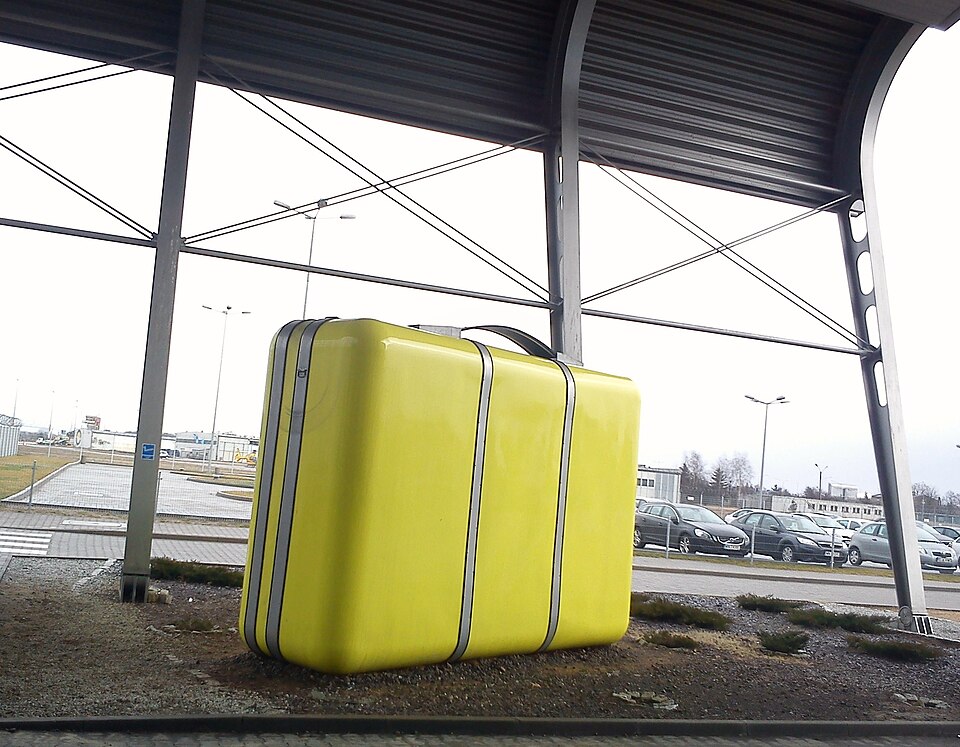
Photo: MOs810, CC BY-SA 3.0, via Wikimedia Commons.