Electric Toothbrushes: Sonic vs. Oscillating
Sonic brushes vibrate side to side; oscillating brushes spin in small arcs. Here is how they differ, which features matter and how to choose one you will actually use.
Rose ClayEP-412
We may earn a commission if you buy through links in this guide. How we make money
Oral-B iO series electric toothbrush
An oscillating-rotating brush with a pressure sensor and timer, a good fit for first-time electric users.
Both sonic and oscillating electric toothbrushes can clean better than a manual one when used properly, mostly because they keep a steady motion and a timer running. The best one is the one you will use twice a day for two minutes. The difference between the two types is mostly about feel.
This guide covers how each works, what extra features matter and how to choose. For any real dental concern, such as bleeding gums, sensitivity or braces, ask your dentist which brush suits you.
How they work
Sonic brushes vibrate the bristles very fast, usually thousands of times per minute, in a side-to-side motion. The brush head looks like a regular one, and you guide it along the teeth and gumline. Philips Sonicare is the best-known line.
Oscillating brushes have a small, round head that rotates back and forth, sometimes with a pulsing action. You hold the head on each tooth in turn, letting it do the work. Oral-B is the best-known line.
Side by side
| Sonic | Oscillating | |
|---|---|---|
| Motion | Rapid side-to-side vibration | Round head rotates back and forth |
| Feel | Ticklish buzz, like a manual brush | Spinning, more focused on each tooth |
| Head shape | Oval, similar to manual | Small and round |
| Technique | Glide along the teeth | Hold on each tooth |
| Noise | Higher hum | Lower whir |
| Best known | Philips Sonicare | Oral-B |
Research summaries generally find both types perform well, and the difference between them is small compared with the difference between using any electric brush properly and not. Treat claims of one type "removing X percent more plaque" as marketing unless a source is cited.
Features that actually matter
- A two-minute timer. Most have one. A 30-second quadrant pacer is a nice extra.
- A pressure sensor. Warns you when you brush too hard, which can wear gums.
- Multiple modes. A gentle or sensitive mode helps people with tender gums.
- Battery life. Many last one to several weeks per charge. Travel cases and USB charging help.
- Replacement head cost. You swap heads about every three months, so check the price per head and whether generics exist.
Skip features you will not use. Bluetooth apps and tracking add cost and are optional for most people.
Budget, mid-range and premium
Entry-level brushes cover the basics: a motor, a timer and one or two modes. Mid-range brushes add pressure sensors and more modes. Premium models add app tracking, smart sensors and a nicer charging case. Most people do well with the entry or mid-range tier.
Examples to look at
Philips Sonicare models range from basic to feature-rich, with a familiar brush shape.
Oral-B iO series is the maker's newer oscillating line, with a pressure sensor and a magnetic drive.
Oral-B Pro 1000 or similar is a long-standing entry-level oscillating brush.
Quip or Burst make slimmer, subscription-friendly brushes that suit travel.
How to use one well
- Wet the head and add a pea-sized amount of toothpaste.
- Place the head against the teeth at a slight angle toward the gumline.
- Let the brush do the work and use light pressure.
- Move slowly from tooth to tooth, covering outer, inner and chewing surfaces.
- Brush for a full two minutes, twice a day.
- Rinse the head and let it air-dry; replace it about every three months.
Part of a larger routine
A brush is only one piece of daily care. Flossing or an interdental cleaner covers what a brush misses, and a dentist checkup covers what you cannot see. If you like setting up simple routines, our simple three-step skincare routine follows the same idea, and a self-care night in is a good place to add a nice toothbrush to your list.
The bottom line
Sonic and oscillating brushes both do the job. Pick the one whose feel you like and whose heads are easy to buy. A timer and a pressure sensor are the features worth paying for. Replace the head every three months, and ask your dentist if you have any specific concerns.
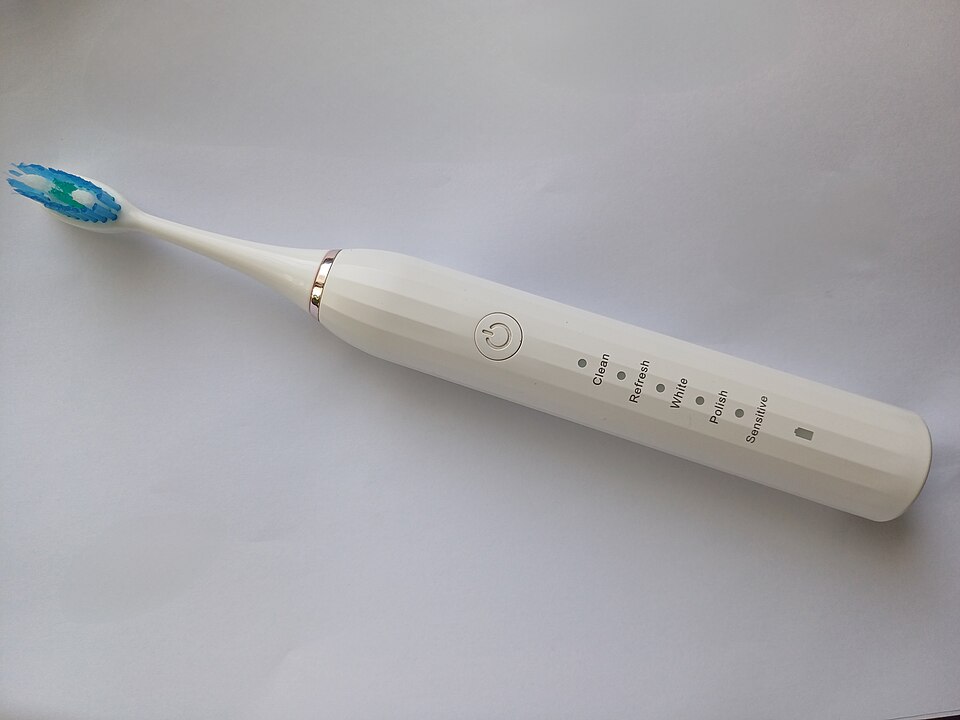
Photo: Curpharar, CC BY-SA 4.0, via Wikimedia Commons.