Grooming Tools for Shedding Season
Match the brush to the coat and shedding gets easier to manage. Here is a plain guide to slicker brushes, undercoat rakes, deshedding tools and gloves, and who each one suits.
BiscuitEP-707
We may earn a commission if you buy through links in this guide. How we make money
Undercoat rake
It reaches the loose underfur that causes most of the tufts on your couch, and it works on a wide range of double coats.
Shedding is not a flaw. It is how a coat renews itself, and in spring and fall it speeds up. You cannot stop it, but the right brush removes loose hair before it lands on the sofa.
The trick is matching the tool to the coat. A brush built for a poodle does little for a husky, and the reverse is also true. This guide walks through the main tool types and who each one suits.
Start with the coat, not the tool
Three coat types cover most pets:
- Short, smooth coats (beagles, pit bull types, many cats). Hair is close to the skin and sheds fine, steady strands.
- Double coats (Labradors, golden retrievers, huskies, German shepherds). A soft undercoat sits under a coarser top coat, and the undercoat comes out in clumps.
- Long or curly coats (many doodles, spaniels, long-haired cats). These tangle and mat more than they shed onto the floor.
If you are not sure which one your pet has, ask the groomer or vet at the next visit. It takes them a few seconds to tell.
The main tools, and what each one does
Rubber curry brush or grooming glove
The gentlest option. A rubber curry brush lifts loose hair and loosens dirt on short coats, and many pets treat it like a massage. A grooming glove works the same way and suits cats and dogs that dislike being brushed.
Slicker brush
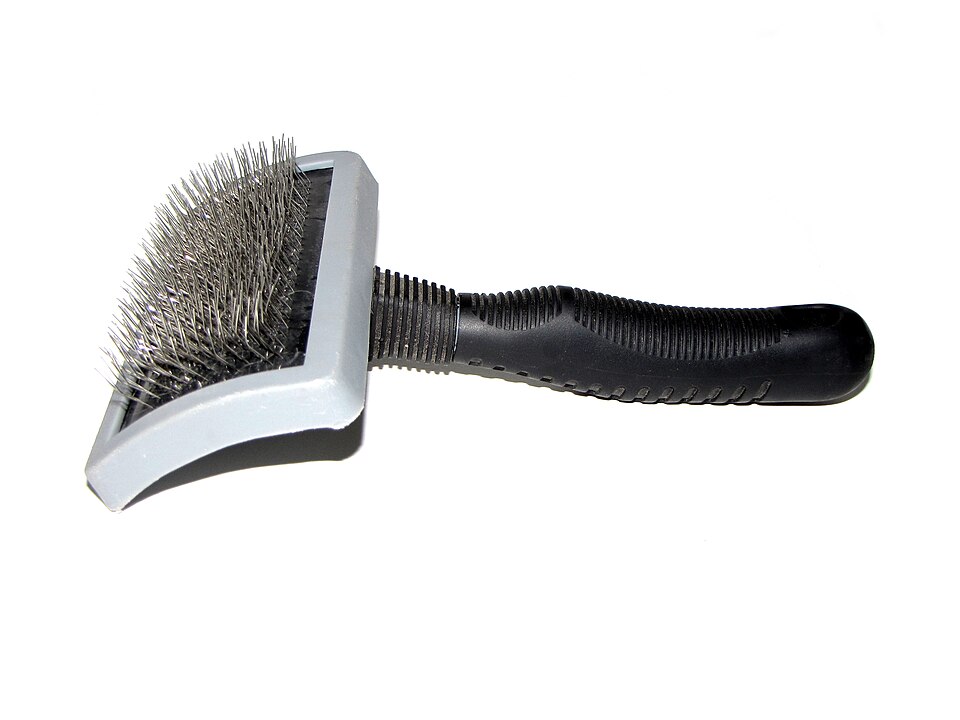
Fine bent wires pull out loose hair and light tangles. It is the standard tool for long, curly and fluffy coats. Use a light hand, because the wires can scratch skin if you press hard.
Undercoat rake
A comb with widely spaced, rounded teeth that goes through the top coat and pulls out the dead undercoat. This is the tool for double-coated breeds during a heavy shed. It is also useful on thick-coated cats.
Deshedding tool
Well-known examples include the FURminator line. These have a fine metal edge that removes a lot of undercoat in a few passes. They work, but they can thin or damage a coat if you overdo it, so follow the maker's guidance and keep sessions short. Avoid them on matted or irritated skin.
Pin or bristle brush
A finishing brush. It smooths the coat after the heavy work and spreads natural oils. It will not do much on its own during a shed, but it is a nice last step for long-haired pets.
Quick comparison
| Tool | Best for | Watch out for |
|---|---|---|
| Rubber curry or glove | Short coats, nervous pets | Light work only |
| Slicker brush | Long, curly, fluffy coats | Pressing too hard |
| Undercoat rake | Double coats | Pulling through knots |
| Deshedding tool | Heavy seasonal shed | Overuse thins the coat |
| Pin or bristle brush | Finishing, shine | Not enough for heavy shedding |
How to brush during a heavy shed
- Brush outside or over a washable towel. The cloud of fur is real.
- Work in the direction the hair grows, in small sections.
- Start with the rake or glove, then finish with a brush to smooth things out.
- Keep sessions to ten or fifteen minutes and hand out a treat now and then, so brushing stays pleasant.
- Check skin as you go. Redness, bald patches or lots of scratching are reasons to call your vet, not to brush harder.
Frequent short sessions beat one long one. A few minutes a day during peak shedding takes more hair off than a weekend marathon, and the floor stays cleaner.
Cleanup for what still gets loose
Even a well-brushed pet leaves some hair behind. A vacuum with a good pet-hair attachment makes the daily cleanup quick. If you are shopping for one, our guide to a robot vacuum for a home with pets covers what to look for. Washable throw blankets on the couch also help, since they go in the machine and not in the trash.
A note on diet and skin
If shedding seems extreme, comes with itching or dull patches, or happens outside the usual seasons, talk to your vet. Diet, allergies and skin conditions can all play a part, and a brush will not fix those.
The bottom line
Pick the tool by coat. Short coats do well with a rubber curry brush or glove. Long and curly coats want a slicker brush. Double coats are best handled with an undercoat rake, with a deshedding tool used sparingly in peak season. Brush in short, regular sessions, and your vacuum will thank you.
Photo: ZooFari, CC BY-SA 3.0, via Wikimedia Commons.