Choosing a Robot Vacuum for a Home With Pets
Fur, litter and the occasional accident make pet homes hard on robot vacuums. Here is what to look for in suction, brushes, bins and obstacle sensing before you buy.
Sage LinenEP-204
We may earn a commission if you buy through links in this guide. How we make money
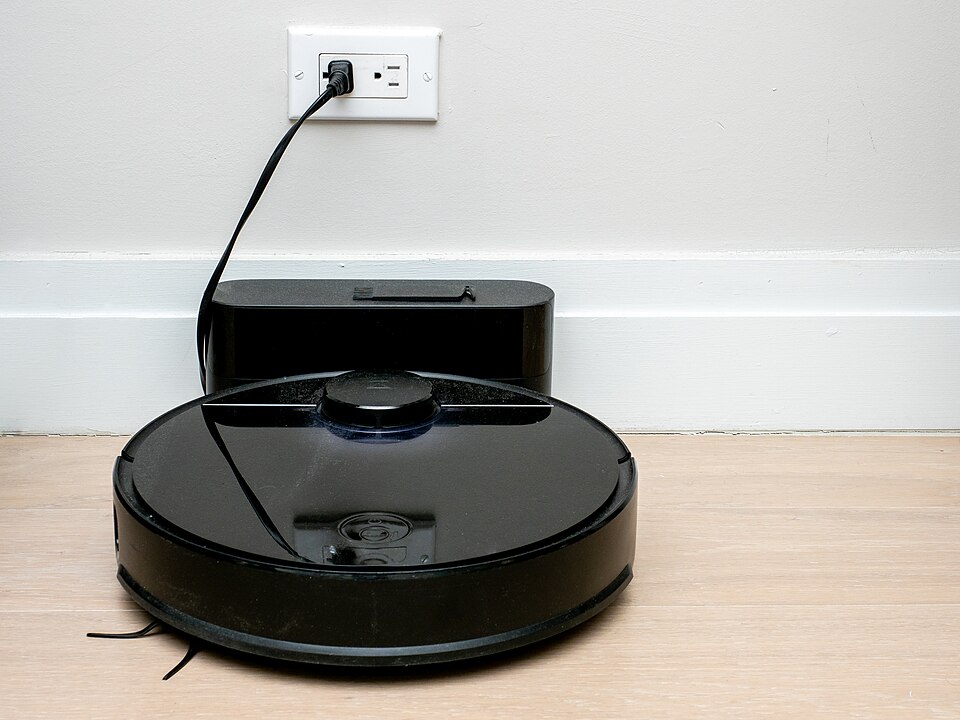
Roomba j-series robot vacuum
It is built around obstacle avoidance, which matters most when pets leave toys, bowls and accidents on the floor.
A robot vacuum can keep up with pet hair better than a human can, because it runs every day instead of once a week. But pets break the usual buying advice. Hair tangles brushes, litter scatters, and one missed accident can turn into a smear across the house.
The short version: pick a model with rubber brushes, a bin you can empty without touching hair, and real obstacle detection. Suction numbers matter less than those three things.
Brushes decide how much hair you cut off by hand
Traditional bristle brushes wrap hair into a tight knot around the roller. Many current models use rubber or silicone rollers instead. Hair slides off them more easily, and the rollers are usually simpler to pull out and wipe clean.
Long-haired pets and long-haired people in the house are the hardest case. Look for a brush roller that comes out without tools, and check whether the maker sells replacement rollers and side brushes at a sensible price. You will be swapping them a few times a year.
Bin size and emptying
Pet hair fills a small bin fast. A tiny bin means the robot stops mid-job and waits for you. Two ways around that:
- A larger onboard bin. Fewer stops, but you still empty it yourself.
- A self-emptying base. The robot dumps its bin into a bag in the dock. You deal with the bag every month or two instead of the bin every day. The trade-off is cost, plus buying replacement bags.
If anyone in the home has allergies, look for a sealed bin path and a filter described as HEPA-type, and check the maker's own filter spec. It will not replace medical advice, so ask your doctor if allergies are a real concern.
Obstacle sensing is the pet feature people regret skipping
Older robots drive by bumping into things. That works around furniture and fails around a dropped sock, a charging cable or a pet accident. Newer models use a camera or structured light to spot small objects and steer around them. Manufacturers sometimes advertise a guarantee or a special setting for pet waste, so read the exact wording, and still keep floors clear of anything you would hate to see dragged around.
Cheaper models use bump sensors and cliff sensors only. They can still be fine in a home where the floor is mostly clear and the pets are calm. Be honest about how tidy your floor really is.
Comparing the main options
| Type | Good for | Watch out for |
|---|---|---|
| Budget bump-and-go robot | Small apartments, short-haired pets, tidy floors | Weak obstacle handling, smaller bin |
| Mid-range robot with mapping | Most homes, room-by-room scheduling | Camera features vary a lot by model |
| Robot with camera obstacle avoidance | Homes where floors are rarely clear | Higher price; read the pet-waste claims closely |
| Self-emptying robot | Heavy shedders, busy owners | Dock takes wall space; bags are a running cost |
| Robot vacuum and mop combo | Hard floors, muddy paws | Mop pads need regular cleaning |
A few options worth knowing
The Roomba j-series is the line most associated with obstacle avoidance and pet messes.
Roborock models are popular for strong mapping and the option of a self-emptying dock.
Eufy RoboVac models are a common budget entry point for small homes with light shedding.
Shark robot vacuums often include self-empty bases and are aimed at hair-heavy homes.
Habits that make any robot work better
- Run it daily, not weekly. Small loads of hair are easy for it; big drifts are not.
- Empty the bin and rinse the filter on the maker's schedule.
- Cut tangled hair off the roller ends with scissors when it builds up.
- Use no-go zones in the app to block off food bowls and the litter area.
- Keep a stick vacuum for stairs and corners. A robot does not do stairs. Our guide to cordless vacuums covers that side.
Think about the rest of the pet routine
Regular brushing cuts the amount of hair that ever reaches the floor. If shedding season is hard on you, see grooming tools for shedding season; a robot works much better when the hair load is lower to begin with.
The bottom line
For a home with pets, spend where it counts: rubber brushes, an easy-to-empty bin and obstacle detection that reads small objects. Add a self-emptying dock if you have a heavy shedder and little patience for daily chores. If your floors are tidy and your budget is tight, a simpler robot still beats no robot at all.
Photo: ajay_suresh, CC BY 2.0, via Wikimedia Commons.