Laundry Upgrades Worth Making This Year
Small changes make laundry day shorter: a sorting hamper, dryer balls, a drying rack, a lint trap habit and better detergent choices. What each one does and who needs it.
Sage LinenEP-204
We may earn a commission if you buy through links in this guide. How we make money
A three-section sorting hamper
Sorting as you go saves the most time of any laundry change.
Laundry is mostly waiting and folding. The upgrades that help most do not touch the machines. They remove small snags: piles that need sorting, socks that vanish, a drying rack that will not stand up.
Below are six changes, from cheapest to biggest. Pick the one that fixes your most annoying step.
Sort before laundry day
A hamper with two or three sections lets you sort lights, darks and delicates as you toss them in. When the wash day comes, each section is a load. Rolling hampers with a bag on a frame are easy to empty, and a lidless basket is easier to use than one with a lid.
- Sorting hampers from Simplehuman, Whitmor and Seville Classics come in slim sizes for tight bathrooms.
- Mesh bags for delicates protect bras and fine knits in the wash.
Better drying
- Wool dryer balls. They tumble among the clothes and can help cut drying time a little. Results vary, so treat them as a cheap trial, and skip fabric softener sheets if you want towels to stay absorbent.
- A folding drying rack. For sweaters, workout gear and anything you do not want to shrink. Look for a sturdy frame with enough rails for a full load.
- Clean the dryer vent. Lint buildup is a fire risk and it slows drying. Clear the lint trap every load and have the vent hose checked yearly.
Detergent and stain care
Pick one detergent that works for the whole household, and use the amount on the label. More soap does not mean cleaner clothes. Extra suds leave residue, which can make towels feel stiff.
| Option | Good for | Note |
|---|---|---|
| Liquid detergent | Everyday loads, cold water | Easy to dose |
| Pods | Convenience | Keep away from children and pets |
| Powder | Heavy dirt, budget buyers | Can leave residue in cold water |
| Fragrance-free detergent | Sensitive skin, babies | Tide Free & Gentle and All Free Clear are known lines |
A stain stick (Shout, OxiClean) and a small bottle of stain remover by the hamper means you can treat stains while they are fresh, which helps a lot.
Make the system easier
- Pick a rhythm. One load a day, or two set days a week. Avoid the all-at-once weekend marathon.
- Move clothes straight from washer to dryer. Wet laundry left in the drum gets musty.
- Fold at the dryer. Do it while clothes are warm and the wrinkles are soft.
- Put it away the same day. A basket of clean clothes on a chair is the start of a pile.
- Use a sock basket. Orphan socks go in one place until their match appears.
Bigger upgrades
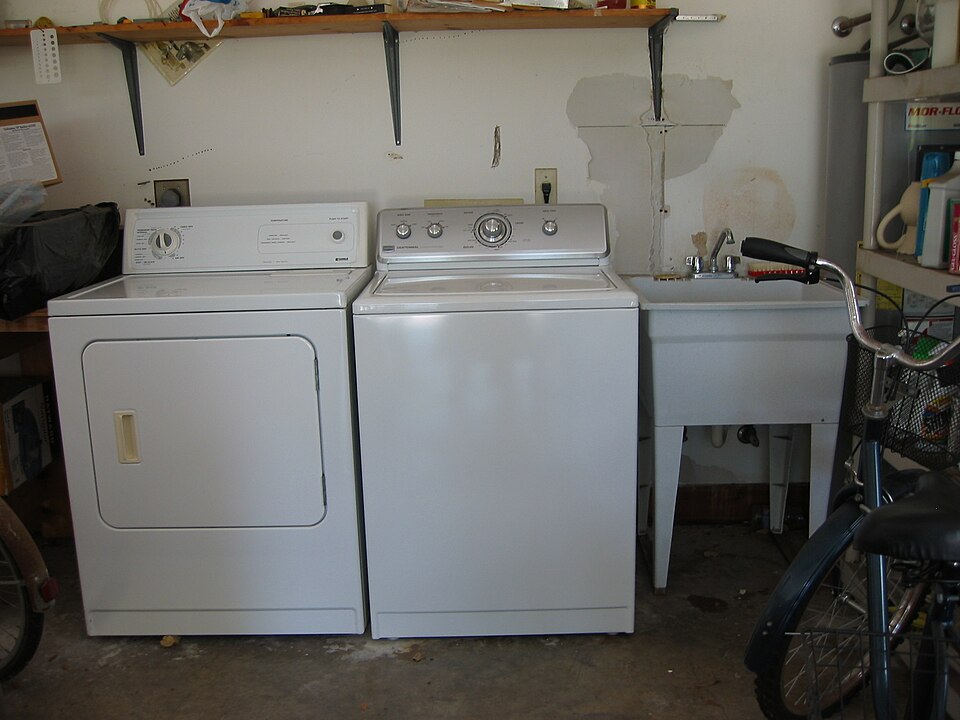
If your machines are old, a new set can save water and time. Front-load washers are gentler on clothes and use less water. Top-load washers are quicker and easier on the back. Look at capacity in cubic feet, spin speed, and the Energy Star label. Ventless heat pump dryers use less energy, though they cost more up front. Check the manual for how to clean the gasket, filter and drum, since mold and smell often come from skipped upkeep.
Short on space? See our small-space storage ideas for shelves that fit over a washer. And our bedding basics post explains how to care for sheets, which are the biggest load in most homes.
Water, temperature and care labels
Most everyday loads wash well in cold water, which saves energy and protects colors. Use warm for towels and sheets, and hot only when a care label or a sickness in the house calls for it. Check the tag on any new garment. The symbols tell you the maximum wash temperature and whether it can go in the dryer. When in doubt, wash on a gentle cycle and dry flat. Do not overfill the drum, since clothes need room to move to get clean, and a crowded dryer takes longer to finish.
The bottom line
You do not need to replace your washer. Start with a sorting hamper and a drying rack, add a stain stick, and set a simple rhythm. Those changes cost little and make the chore smaller.
Photo: Birdies100, CC BY-SA 2.0, via Wikimedia Commons.