Insulated Tumblers That Keep Drinks Cold All Day
What makes an insulated tumbler hold cold, how to compare lids, sizes and cup holder fit, and which well-known lines are worth a look.
CreamsicleEP-633
We may earn a commission if you buy through links in this guide. How we make money
Double-wall vacuum-insulated stainless steel tumbler with a straw lid, 30 oz
Vacuum insulation is the part that keeps ice from melting, and the straw lid makes it easy to sip all day.
A good insulated tumbler can keep a drink cold for hours, and keep ice from melting for much of a day, depending on the design, the lid and how warm the room is. Makers publish their own hold-time claims, and those numbers come from lab conditions, so treat them as a guide, not a promise.
Here is what actually makes a tumbler hold cold, and how to pick one that fits your day.
What makes a tumbler hold cold
- Double-wall, vacuum-insulated stainless steel. Two layers of steel with the air removed between them. With no air to carry heat, the outside warmth has trouble reaching your drink. This is the feature to look for.
- A good lid. A lot of heat sneaks in through the lid. A lid with a sealed gasket and a small opening holds cold better than a loose, open one.
- Start cold. Fill the tumbler with ice first, and chill the cup with water for a minute. It extends the cold.
Plastic tumblers and single-wall steel cups are lighter and cheaper but do not hold cold nearly as long.
Size: pick the one you will carry
| Size | Good for | Notes |
|---|---|---|
| 12 to 20 oz | Coffee, small iced drinks | Fits most car cup holders |
| 20 to 30 oz | All-day water, iced coffee or tea | The most popular range |
| 32 to 40 oz | Heavy drinkers of water, gym bags | Often too wide for a cup holder, so check the base |
Lid types
- Straw lid. Easy sipping, and good with ice. Slightly less leakproof, so keep it upright.
- Slider lid. A sliding cover over the opening. Splash resistant but not fully sealed.
- Screw-on flip or spout lid. More secure for a bag. Better when leaks are a worry.
Check whether the lid is dishwasher safe, and whether the straw can be removed for cleaning.
Features that matter day to day
- Cup holder fit. Look for a tapered base around 3 inches wide if you drive.
- A handle. It helps with larger tumblers, especially if you carry it with other things.
- Weight when full. A big steel tumbler gets heavy. Try to picture lifting it all day.
- Easy cleaning. A wider mouth and removable parts keep odors away.
- Finish. A powder-coated finish grips well but can chip. Steel stays plain but can dent.
Well-known lines to compare
- Stanley Quencher, a large tumbler with a handle and straw lid.
- Yeti Rambler, a tough, plain tumbler with a long record.
- Hydro Flask, with lots of colors and sizes.
- Simple Modern and Owala, lower-priced options that offer many sizes and lid styles.
Compare the lid, the size and the warranty, since those differ more than the steel does.
Care tips
- Wash by hand if the maker recommends it, since some finishes dull in the dishwasher.
- Clean the lid and straw gaskets often. Trapped liquid is where odors start.
- Do not freeze a full, sealed tumbler. Liquid expands.
- Skip carbonated drinks in a sealed lid unless the maker says it is safe, because pressure can build.
What to put in it
Plain water is the simplest. If you want something with flavor, our guide to low-sugar drinks to swap for soda has ideas, and our piece on cold brew and iced tea at home covers an easy batch drink for your tumbler.
Hot drinks work too
The same vacuum insulation that keeps ice frozen also keeps coffee and tea hot. If you want one tumbler for both, check that the lid is rated for hot liquids, and be careful with straws and open slots, which can let hot drinks splash. A plain, tight lid is the safer choice for a hot morning commute.
The bottom line
Choose a double-wall, vacuum-insulated steel tumbler in a size you will carry, with a lid that suits how you drink. Check cup holder fit if you drive, and clean the lid often. Brand matters less than design and lid, so compare features before you pay for a name.
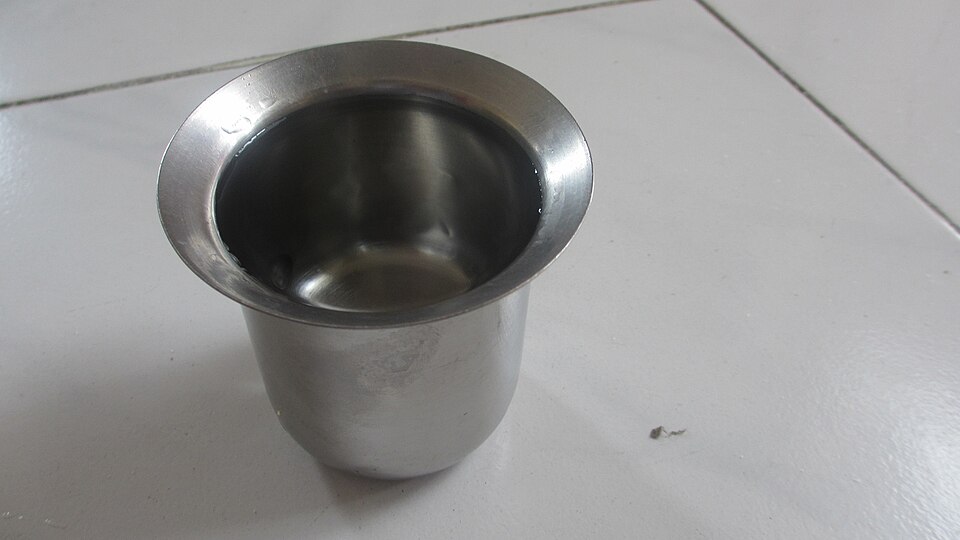
Photo: Ananth Pattabiraman, CC BY-SA 4.0, via Wikimedia Commons.